
AUTHORIZATION
Blog
How to implement managed IT services
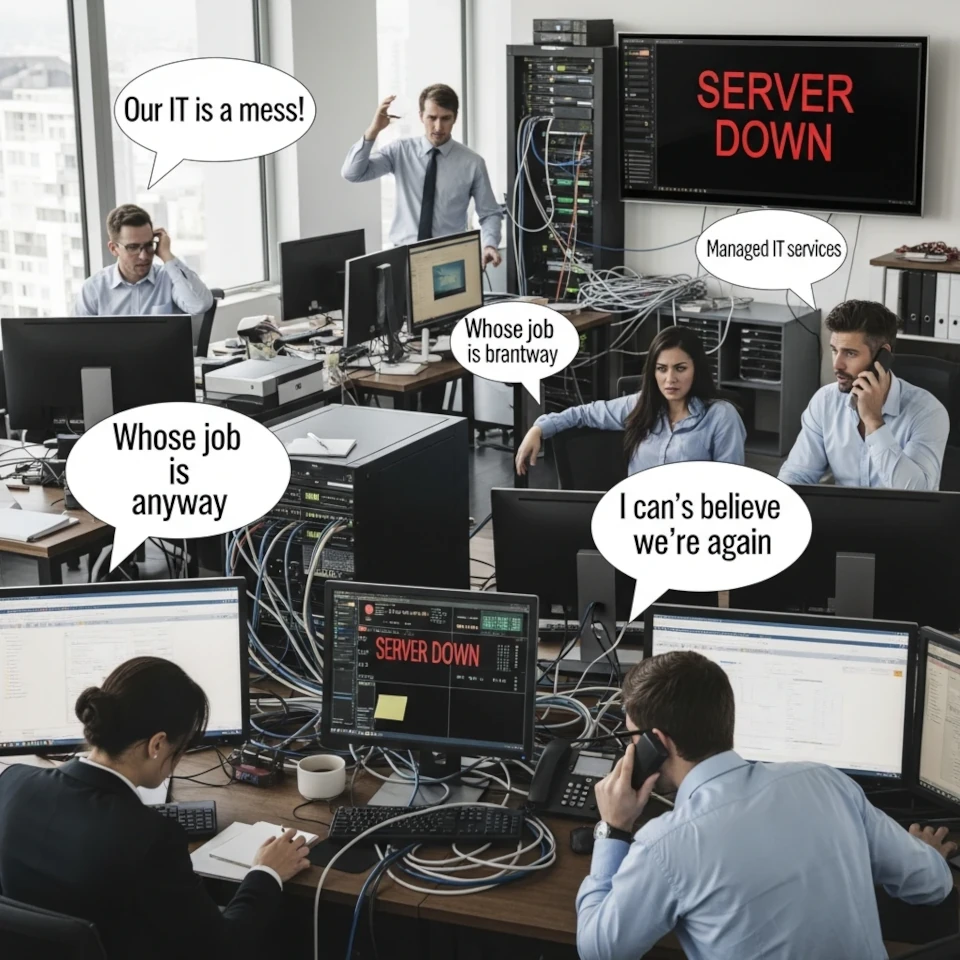
If the IT environment in a company has grown faster than its processes, the question of how to implement managed IT services usually arises not theoretically, but after a specific signal - more frequent downtimes, unclear responsibilities, security risks, or rising costs. For a small or medium-sized business, this is not just a technical decision. It is an operational and management issue concerning how predictably the business will operate in the next two or three years.
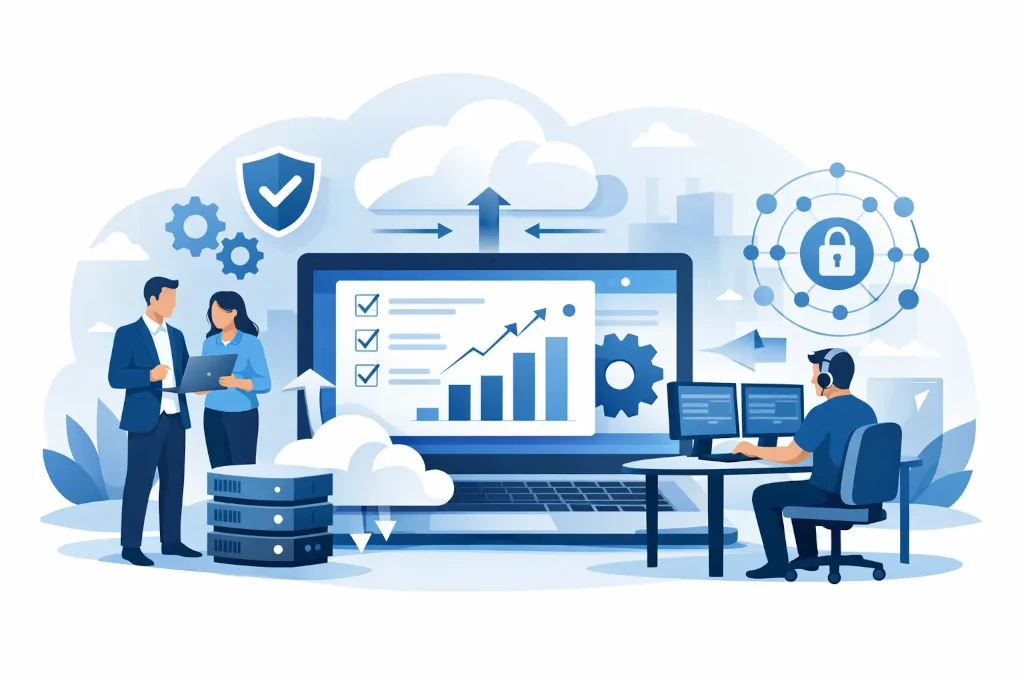
Managed IT services are not simply an outsourcing solution that "fixes computers." When implemented correctly, they involve a clear model of accountability, monitored infrastructure, controlled user support, a defined security approach, and transparency at the management level. That’s why the implementation should begin not with price comparisons but with an assessment of the company's real needs and risk profile.
How to implement managed IT services without chaos
The most common mistake is trying to change everything at once. If a company currently has various suppliers, one internal administrator, legacy systems, and incomplete documentation, a rapid transition creates more disruption than benefits. A practical approach is gradual - first understand the existing situation, then take over critical functions, and only thereafter optimize the environment.
The starting point is an IT audit. Without it, making a quality decision regarding the scope of service, priorities, and boundaries of responsibilities is impossible. The audit should not only look at the list of equipment but also at licenses, access rights, backups, cloud services, network architecture, endpoint security, recovery procedures, and the role of existing service providers. In many companies, it is precisely at this stage that it becomes apparent that critical systems have neither full oversight nor a documented responsible party.
After the audit, priority setting follows. Not all problems need to be solved in the first month. If a company has a high risk of downtime, priorities will be monitoring, backups, and incident response. If the problem is growth and a decentralized environment, the focus will be on standardization, access control, and organizing cloud infrastructure. If a reorganization, new branch, or acquisition is expected, strategic IT management may be more critical than just daily support.
What a company needs to do before transitioning
To manage IT externally, a company must first agree with itself on three things - which processes are critical, who makes decisions, and what level of service is actually required. If these questions are unclear, even the best service provider will operate on assumptions.
Defining critical processes is not bureaucracy. It means understanding what happens if email, file storage, accounting systems, manufacturing equipment, or remote access go down for two hours. For some companies, downtime means inconvenience. For others, it means unbilled invoices, delayed deliveries, or contract penalties. The managed services model should be based on this reality, not on a universal package.
Equally important is the chain of decision-making. If the service provider cannot quickly align changes, access, procurement, or respond to security incidents, IT management becomes slow. Therefore, even at the implementation stage, contact persons, escalation procedures, and budget limits should be established. Management does not need to get involved in every small issue, but it should see where operational action ends and business decision-making begins.
Selecting a service level requires pragmatism. Not every company needs 24/7 support, but almost every company needs a clear response model for critical incidents. Not every environment requires a full hybrid infrastructure, but many need reliable backups and restoration testing. The goal is not to buy the maximum package. The goal is to cover the most significant risks with reasonable costs.
How to evaluate a suitable managed IT service model
Managed IT services can vary widely. In one case, it involves helpdesk and workstation maintenance. In another - full infrastructure monitoring, cloud service administration, cybersecurity, backups, audits, and external IT management. Therefore, before signing a contract, one should evaluate not only the price but also the coverage.
Companies in a growth phase usually benefit from choosing a model that combines daily support and strategic elements. Purely operational support solves today’s problems but does not address tomorrow’s architecture, security approach, and budget planning. Conversely, merely a consultative approach without execution resources creates a gap between plan and reality.
When evaluating a service provider, it is essential to see if they can take over the environment with a documented approach instead of relying on individual knowledge. A good implementation requires inventory, access organization, monitoring, standards, and a regular reporting model. If these elements are not evident in the offer, there is a risk that the collaboration will be reactive - problems will only be resolved after they begin affecting the business.
Implementation phases in practice
The first phase is usually the takeover. During this time, documentation is collected, administrative access accounts are reviewed, lease, license, and warranty timelines are checked, and basic monitoring tools are implemented. If the company has not previously had consistent IT management, this phase may uncover several uncomfortable issues - unused accounts, outdated equipment, insufficiently secured remote access, or backups that theoretically exist but have not been practically tested.
The second phase is stabilization. The goal here is not to modernize the entire infrastructure but to reduce immediate risk. This typically means organizing the minimum security standards, recovery procedures, establishing monitoring for critical nodes, and creating a clear user support process. This is the moment when the company starts to feel the practical value of managed services - fewer unexpected disruptions, faster response times, and clearer accountability.
The third phase is optimization. Once the environment is taken over and stable, decisions can be made regarding standardization, migration to the cloud, hybrid infrastructure, network transformation, or workplace modernization. Here it is especially important for the service provider to think not only technically but also in business terms. For example, a complete migration to the cloud is not always the best solution. Sometimes a hybrid model is cheaper, safer, and more practical for a specific operational model.
What often fails during implementation
The biggest risk is not the technology itself but unclear expectations. If a company expects strategic IT management but only signs a contract for user support, disappointment is inevitable. If the service provider takes over the environment without full accesses or without management support for standardization, the result will be partial control and a prolonged transition period.
Problems often also arise from the desire to maintain old exceptions. One employee needs a specific configuration, one department has its own file storage model, and one system does not adhere to security policies because "that’s how it has always been." Such exceptions inflate management costs and increase risks. Not all exceptions are bad, but each must be justified by a business need, not by habit.
Another sensitive issue is the role of the internal team. Implementing managed IT services does not mean that internal people become redundant. In many companies, quite the opposite - they are relieved of routine tasks and can focus on systems, processes, or business projects. It is only essential to clearly delineate responsibilities between the internal team and the external partner.
How to tell that the model is working
A good managed IT service model should not only be evaluated by how quickly requests are closed. It should be assessed by the stability of the company's operations. Is downtime decreasing? Are costs becoming more predictable? Is management receiving transparent information about risks, improvements, and priorities? Is recovery from incidents tested, not just accepted as possible?
If IT remains a black box after implementation, the service is not fully implemented. Management does not need to know every technical detail, but it should see the control. This means regular reports, clear KPIs, incident analysis, and an understandable development plan. In this regard, managed IT services are as much a management tool as a technical function.
For companies that need not only support but also external IT management expertise, a model where operational execution is combined with consultative oversight is particularly valuable. This approach helps make timely decisions regarding security, infrastructure development, supplier control, and investment priorities. In KSK IT practice, this combination is often decisive for companies that do not want to build a large internal IT structure but want to maintain management level control.
If you are thinking about changes, you do not need to start with a full transformation. It is much wiser to begin with a clear assessment of the situation, identify critical risks, and implement a management model that matches your business pace, rather than an abstract ideal.
